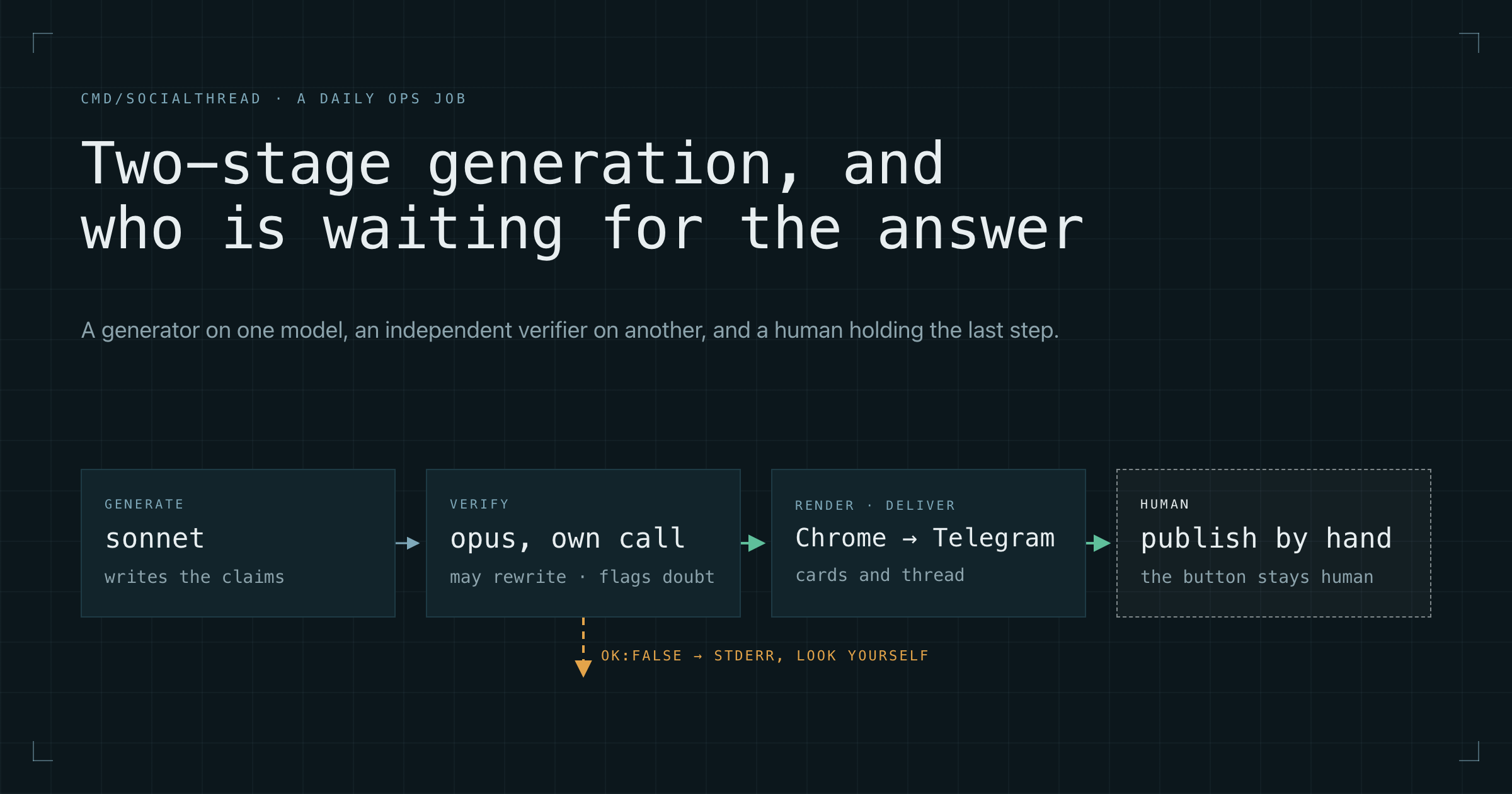
Signal path: a generator on sonnet, an independent verifier on opus, an ok:false side channel, and a human pressing publish

Two-stage generation, and who is waiting for the answer

what decides which transport an LLM call gets is who is waiting for the answer. Everything else in this post follows from that one line. The system is small and unglamorous: an ops utility in the mening repo, cmd/socialthread, that drafts one social post a day for a language-learning app. It runs on my machine, it talks to nobody’s users, and a human presses publish. That combination is what makes it a clean place to think about transports and about verification, because both questions show up in a form small enough to hold in your head. ...

July 25, 2026 · 9 min · Aleksandr Likhachev

Ship a skill or be invisible to the agent

your users are starting to live inside an agent. if your app isn’t a skill it can load, you don’t exist to it. More of the day now starts in one place. A person opens OpenClaw or Hermes, types what they want done, and the agent figures out how to do it. If you’ve shipped a skill, it calls your product. If you haven’t, it reaches for whatever competitor did, or it skips the job and moves on. You never find out it happened. There’s no bounce on your analytics for a request that was never made to you. ...

June 21, 2026 · 4 min · Aleksandr Likhachev